
Trauma-Informed Stress Response Training
For youth workers, mentors, educators, and health staff working with young people at risk
When a young person "loses it" - throws a chair, shuts down, runs - your team needs more than behaviour management. They need to understand what's happening in that young person's nervous system, and know what to do.
SECTION 03 What Your Team Will Learn

MODULES 1-5
MODULES 11–12
MODULES 6-10
TRACK Stress
Read the six stress zones in yourself and others
MODULES 6-10
MODULES 11–12
MODULES 6-10
Regulation Prescription
Body-first tools to get back to green
MODULES 11–12
MODULES 11–12
MODULES 11–12
Coregulation Prescription
What to do when THEY'RE triggered
MODULES 13-14
Five Fingers of Trauma
Understand the backstory driving behaviour
MODULES 15
One-Page Visual Assessment
Profile each young person — history, triggers, strengths
MODULES 16-17
MODULES 16-17
Fast Track to BETTER!
Solution-focused goals + motivational interviewing
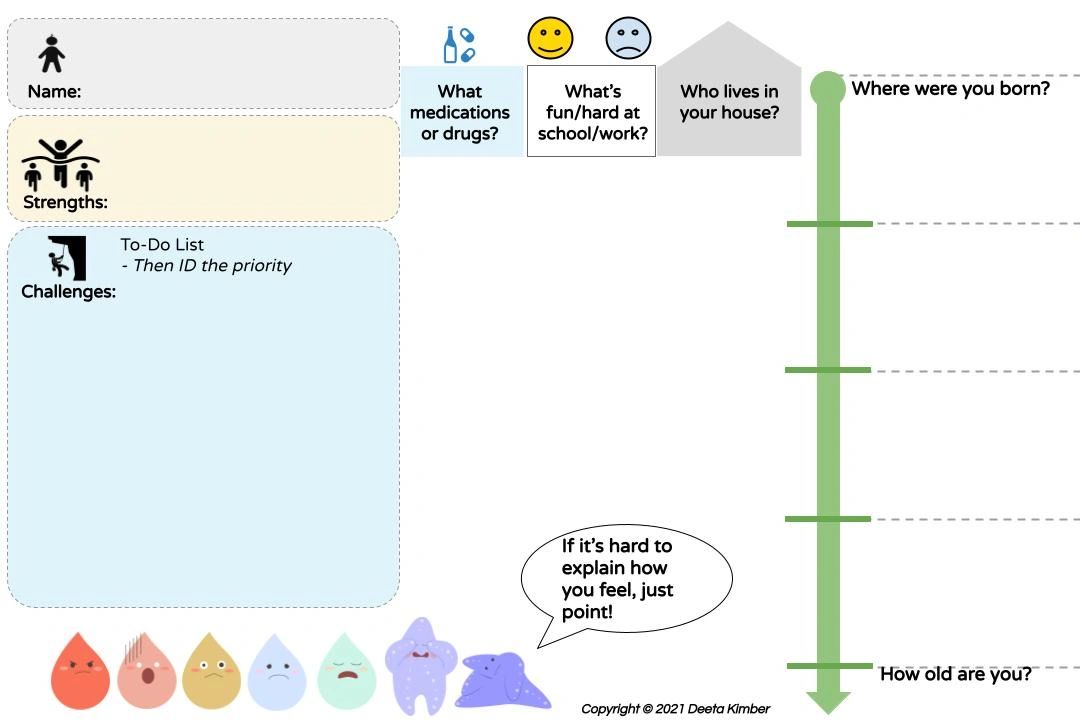
SECTION 04 The One-Page Visual Assessment
Each young person gets a visual profile showing what they've been through, their triggers, and their strengths. When they escalate, staff look at the page and understand why - and know what to do.
This transforms "he's being difficult" into...
"his system just got hijacked - here's what will help."
Section 07 Who Is This For

Youth diversion programs
Social-Emotional Learning
Aboriginal health services
Justice and corrections settings
Residential care facilities
Schools (student services, AIEOs, wellbeing teams)
Family services and NGOs
Youth mentoring programs
Section 08 About Dr Deeta Kimber

FRANZCP | Child & Adolescent Psychiatrist | Tracking Better®
Child and adolescent psychiatrist (FRANZCP) with 30 years clinical experience.
Before 12 years of fly-in fly-out work in the Kimberley, Deeta worked in Melbourne Youth Justice - with young people where the mental health system doesn't fit.
This training is built from frontline work in remote communities and children's prisons: pragmatic, trauma-informed, and designed for when things escalate.